


-
I have decided to commission a guitar with Allen Park, Michigan luthier Gary Zimnicki.
It's All in the Details - Zimnicki Guitars
Gary builds archtop, flattop, Gypsy, nylon string guitars as well as mandolins and ukuleles. I have known Gary for over a decade now, meeting him and auditioning his instruments at the Artisan Guitar Show, Rocky Mountain Archtop Festival and Woodstock Invitational Luthiers Showcase. I have always found his instruments to be excellent, but never thought of the right project for him up until now.
I recently visited the Musical Instrument Museum in Scottsdale, AZ and saw a visiting collection of instruments called “Acoustic America”. Among that collection was a 1924 Gibson Lloyd Loar signed L5. This is architype American archtop guitar. I decided to have Gary make a 16” L5 derivative archtop for me. It will not be an exact replica but with be an instrument with a very strong nod to the Kalamazoo namesake with a couple of custom material and ergonomic features.
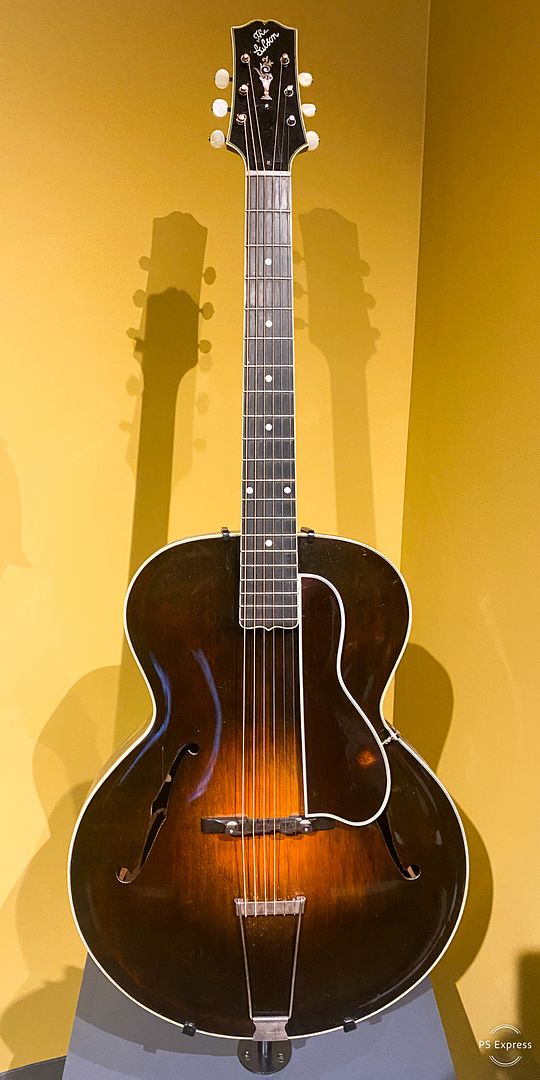
I was fortunate to get some good measurements on some vintage L5s and was able to get some photos of certain details. These archtops have asymmetrical parallel braces likely derivative of mandolins. The 1923-1924 Type 1 models had Birch backs and Virzi Tone Producers (elliptical spruce disk with f-holes suspended from the soundboard on three posts) which this instrument will not have. The Type 2 models 1925-1929 will be more what this guitar will be based on.
The Gibson catalog from 1924-25 stated “Sounding boards are carved from Adirondack, West Virginia, Norway or Pacific Coast spruce of the very highest grade and quality available.” This archtop top set is quartersawn, AAA aesthetic grade Sitka Spruce sourced from Alaska Specialty Woods (Craig, AK). Being harvested from an enormous old growth tree, it has incredibly tight grain structure and displays beautiful medullary array as a result of their sawyering. Sitka Spruce is a denser and stiffer softwood, on average falling in between Norway Spruce (Picea abies) and Red Spruce (Picea reubens).
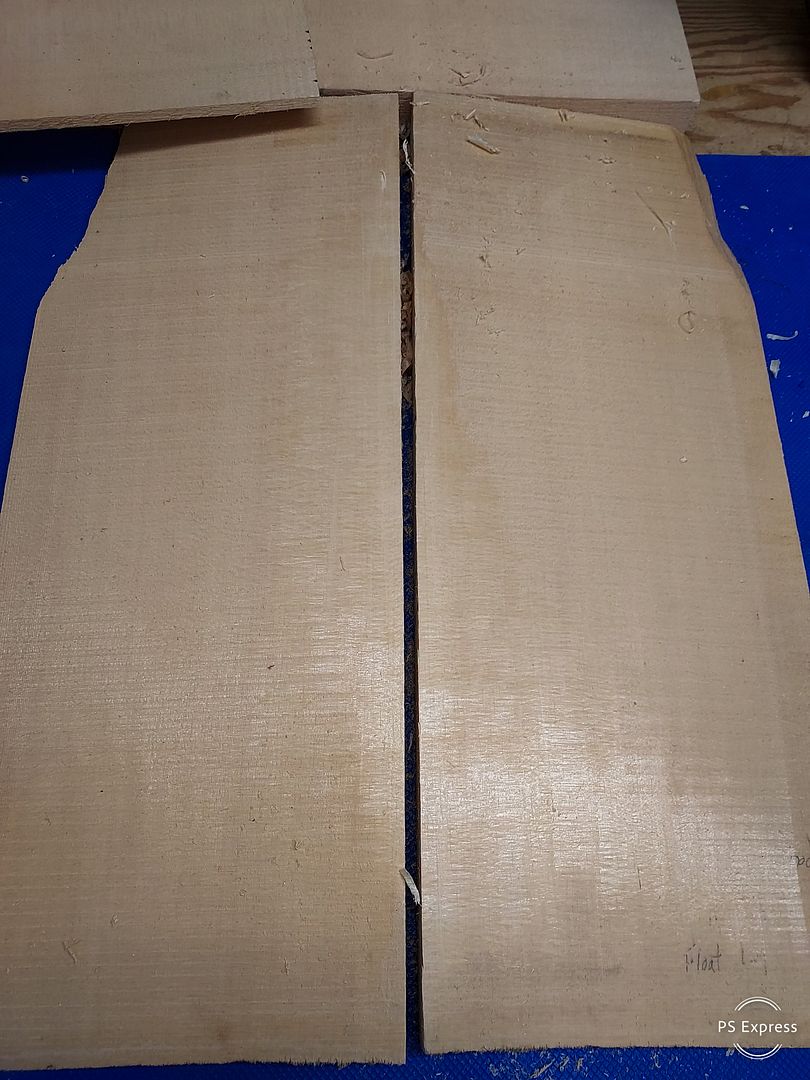
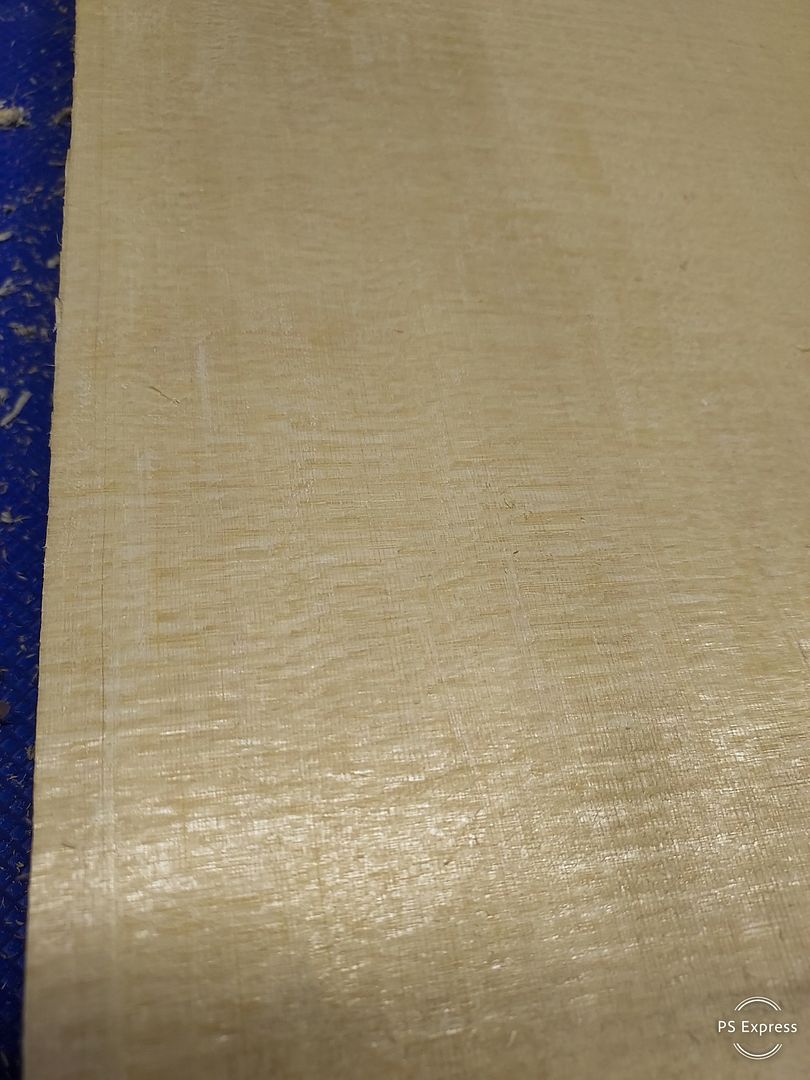
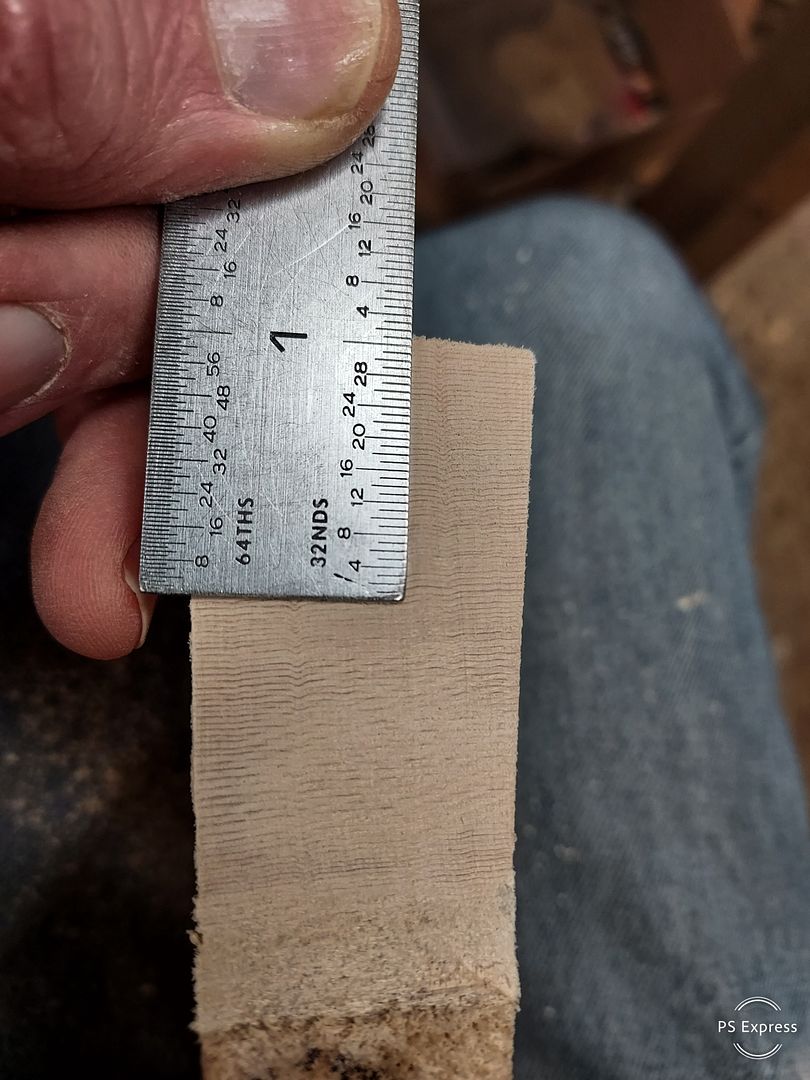
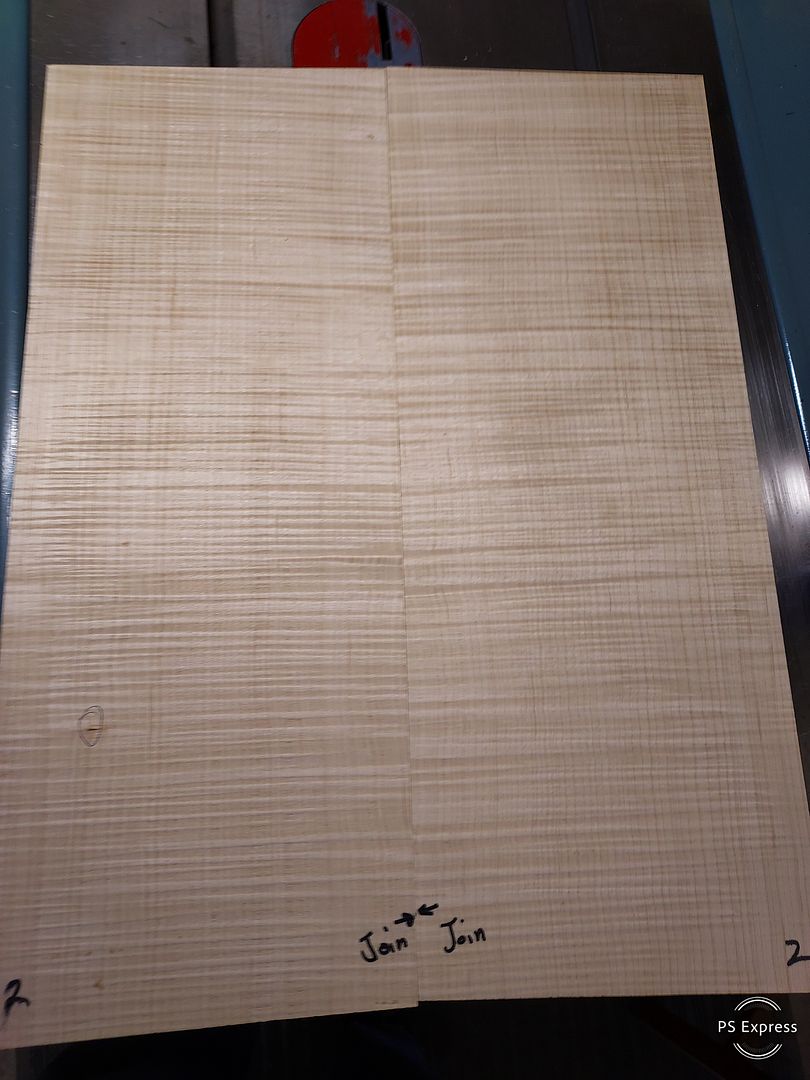
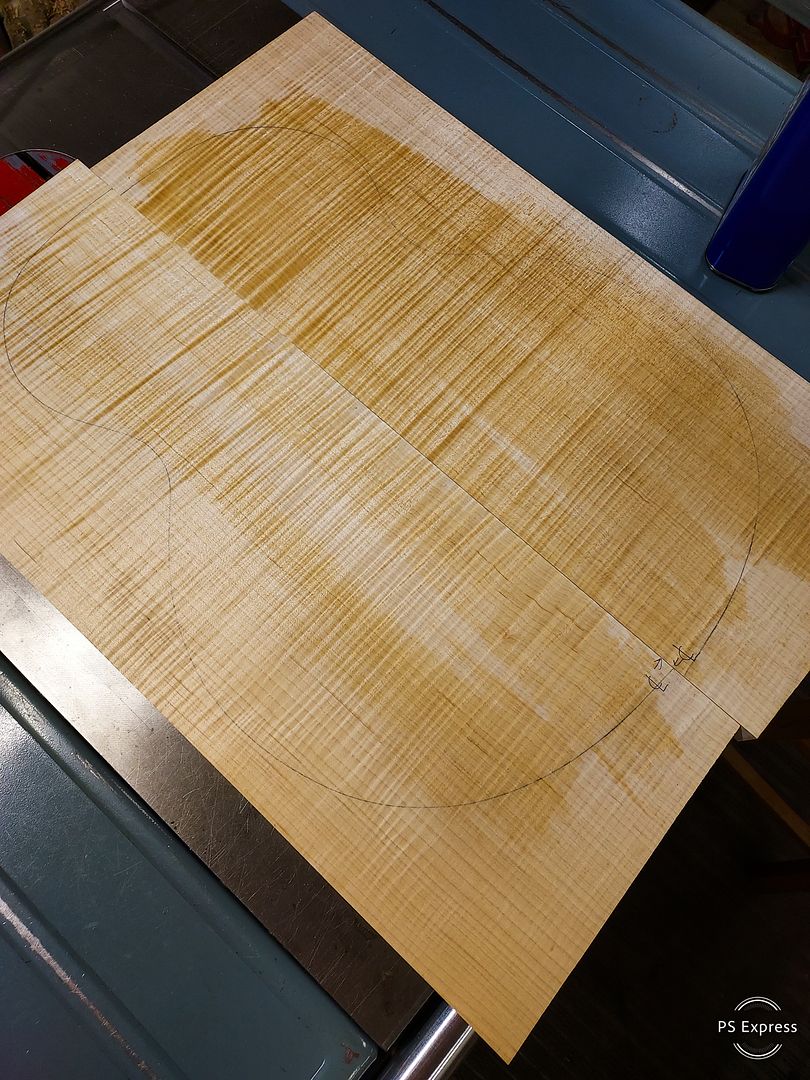
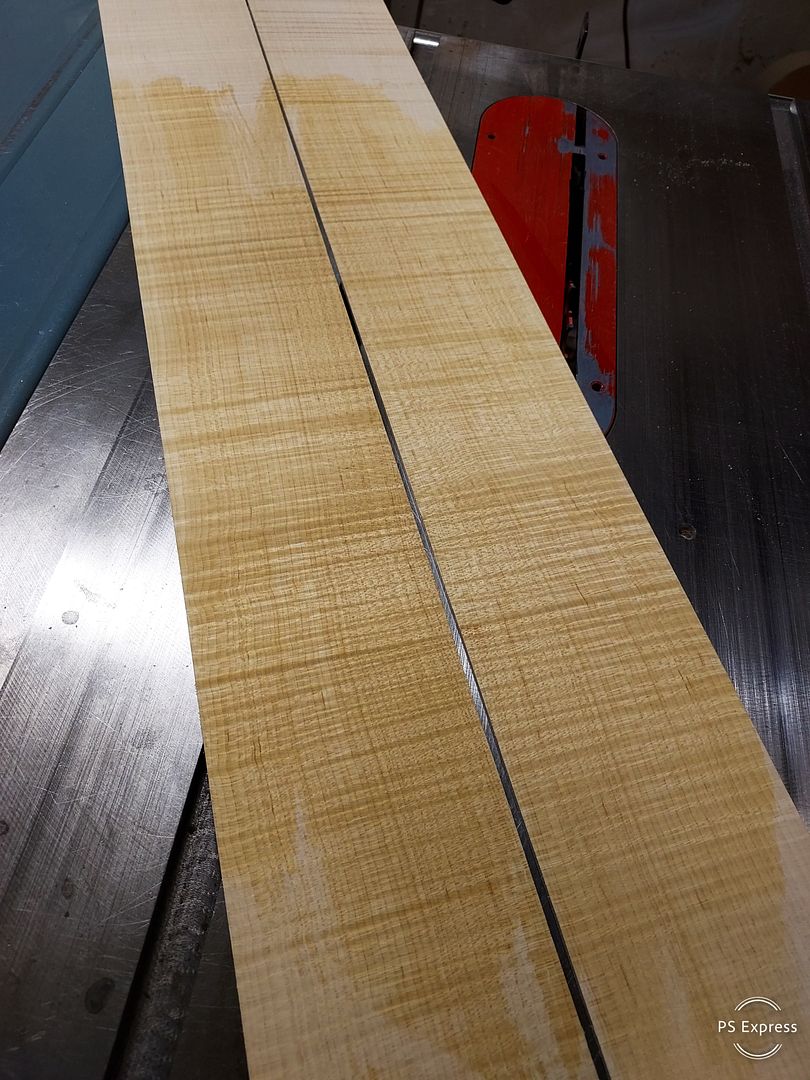
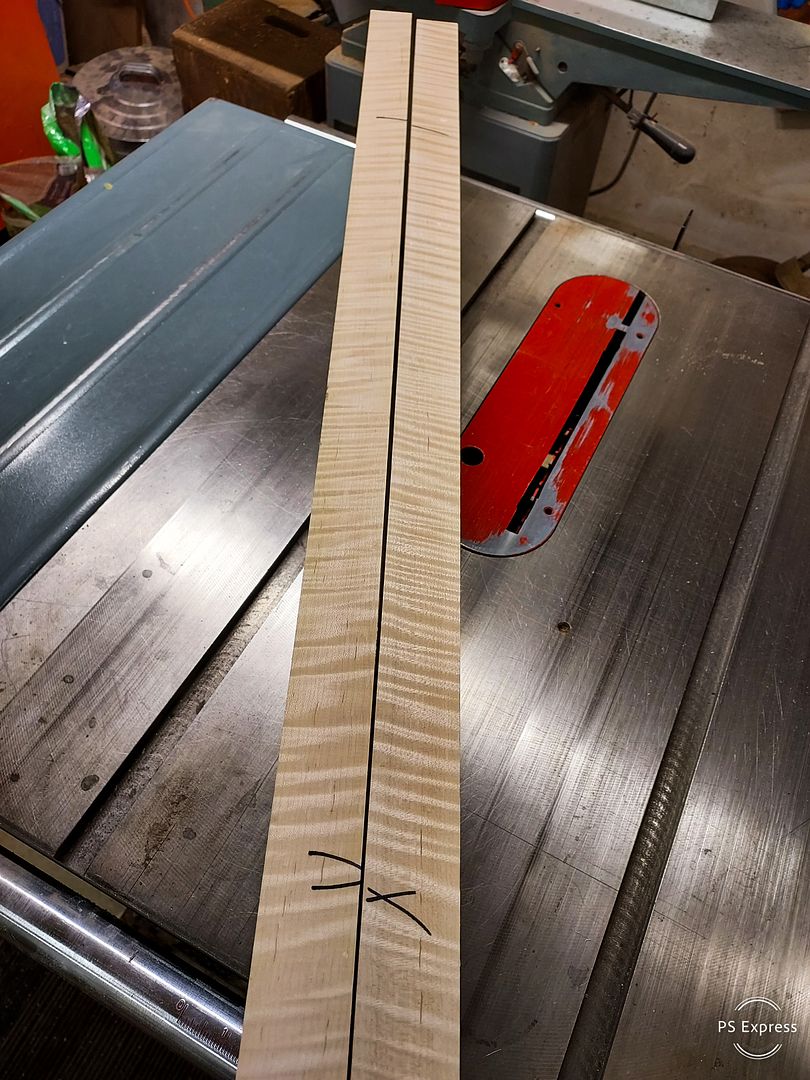
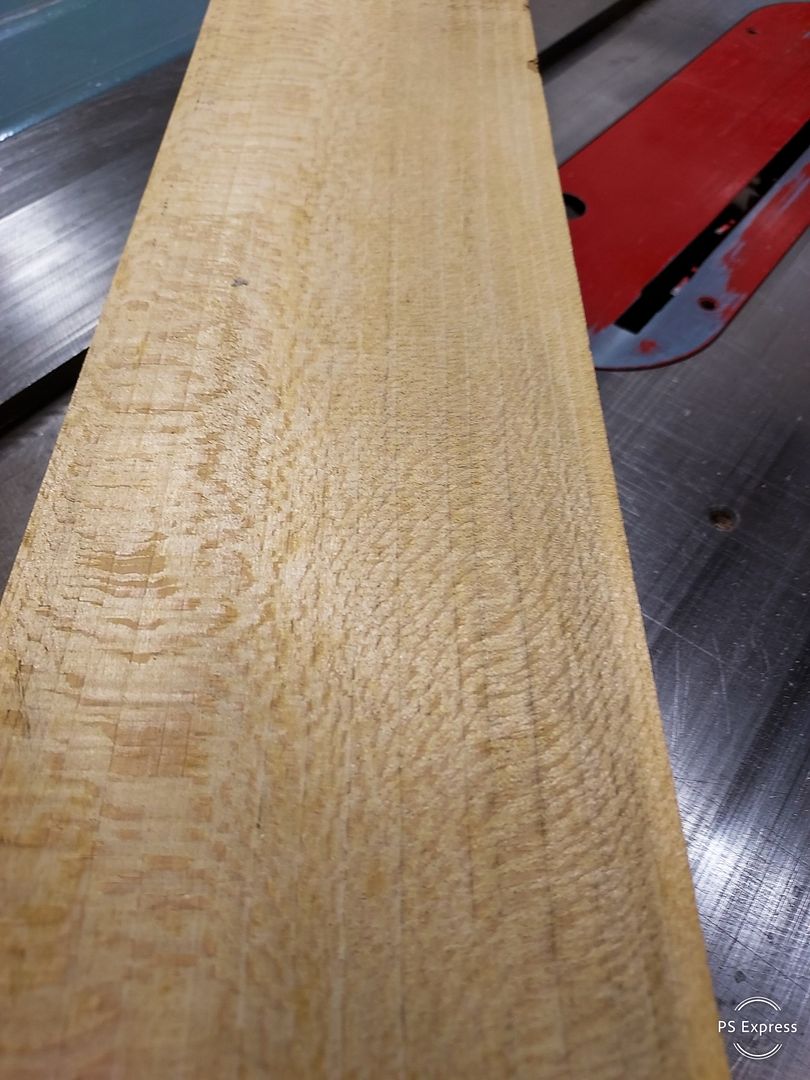
The Gibson catalog from 1924-25 stated: “Back-boards are fashioned from the finest quality straight and curly grained Northern Michigan maple or birch, depending on the style and grade of the instrument.” The back and side set is a beautiful curly, AAA aesthetic grade fiddleback, Red Maple (Acer rubrum) that was originally sourced from American Specialty Hardwoods (Clinton, MI). Red Maple as one of the North American soft maples that falls in between western Bigleaf Maple (Acer macrophyllum) and European Sycamore (Acer pseudoplatanus) in terms of density, hardness and stiffness. We will use it for the back, sides and part of the three piece neck.
Back Set
Rims
Neck
Instead of using traditional celluloid binding, Gary will use hardwood binding on this instrument. The guitar will have a Kalamazoo-esque Cremona Brown Sunburst, so we wanted to use a durable, hard, color contrasting, visually interesting hardwood for binding. We chose East Indian Satinwood (Chloroxylom swietenia). This a dense, hardwood light in color with beautiful, chatoyant figure.
Here are the specifications…
Dimensional Specifications:
Upper Bout - 11-5/8”
Waist - 9-11/32”
Lower Bout - 16-7/32”
Overall Length - 40-1/2”
Body Depth - 20-1/4”
Rim Depth - 3-11/32”
Nut Width - 1-3/4”
Scale Length - 24-3/4”
String Spacing at Bridge - 2-5/16”
Neck Profile - C Profile
Neck Depth 1st Fret - 54/64”
Neck Depth 10th Fret - 60/64”
Fretboard Radius - 12” radius
Finger Rest Length - 9-7/16”
Finger Rest Width (Widest Point) - 3-1/2”
Materials Specifications:
Top Wood - Sitka Spruce
Top Braces - Red Spruce
Linings - Spanish Cedar (Reverse Kerfed Top, Kerfed Back)
Neck Block - Honduran Mahogany, Laminated
End Block - Honduran Mahogany, Laminated
Back & Sides - Red Maple
Body Binding - Ceylon Satinwood
Top Purfling - Black Fiber/Maple/Black Fiber
Side Purfling - Black Fiber/Maple/Black Fiber
Finish - Seagraves Nitrocellulose Lacquer, Cremona Brown Sunburst
Finger Rest - Gaboon Ebony
Finger Rest Binding - Ceylon Satinwood
Finger Rest Purfling - Maple/Black Fiber
Bridge - Gaboon Ebony, Gold Saddle Adjustment Wheels
Neck Woods - Red Maple/Honduran Mahogany/Red Maple
Fretboard - Gaboon Ebony
Fretboard Top Purflings - Maple/Black Fiber
Fretboard Bindings - Ceylon Satinwood
Fretboard Side Purflings - Ebony/Maple
Side Position Markers - 1.5 mm @ 3, 5, 7, 9, 12 and 15 frets
Position Markers - 3 mm MOP Dots @ 5, 7, 9 12 x 2 and 15 frets
Nut Material - Unbleached Cow Bone
Heel Plate - Ceylon Satinwood/Black Fiber/Maple
Truss Rod - Allied Lutherie Double Acting
Head Plate Veneer - Gaboon Ebony
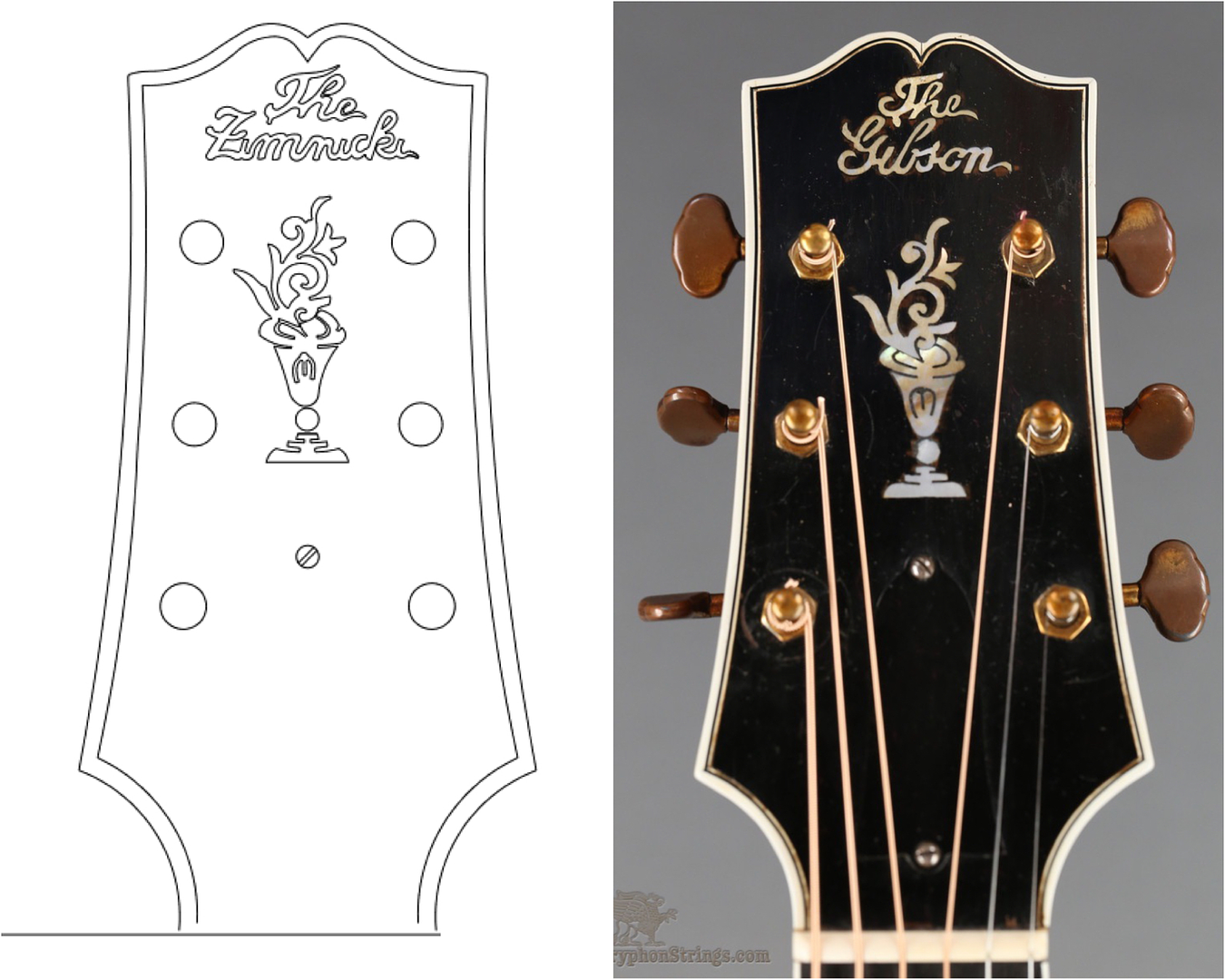
Head Plate Inlay - MOP Flower Pot, “The Zimnicki”
Head Plate Top Purfling - Maple/Black Fiber
Head Plate Binding - Ceylon Satinwood
Head Plate Side Purflings - Ebony/Maple
Truss Rod Cover - Gaboon Ebony
Hardware Specifications:
Tuners - Waverly Individual Guitar Tuners with Black Pearl Knobs for Solid Pegheads, Gold
Tailpiece - Custom Made, Gold
Finger Rest Bracket - Gold Plated, Ceylon Satinwood/Ebony/Maple
End Pin - Waverly Ebony End Pin with MOP Shell Inlay
Fret Wire - Jescar EVO 43080
Strings - 80/20, 12-53
Case - CrossRock
The build will not begin until 2025 with a fall 2025 delivery. I will post photos here when the build begins in earnest.Last edited by iim7V7IM7; 02-22-2025 at 10:47 AM.
-
05-25-2024 12:03 PM

-
This is going to be an amazing project.
 Originally Posted by iim7V7IM7
-
Beautiful write up. Look forward to future posts.
-
If you can't afford the real deal, but can afford a bit more than a Loar costs Originally Posted by iim7V7IM7
 I'm sure it'll turn out great, so very premature kudos!
That must be the only faux pas for my eyes ... but there's time enough to discuss putting on matching wood knobsTuners - Waverly Individual Guitar Tuners with Pearl Knobs for Solid Pegheads, Gold
-
GOOD CHOICE -- GARY ZIMNICKI
Some examples of Gary's labor of love from his exhibit at Woodstock October 2022 -- I love his guitars!
Purple Heart hardwood binding is beautiful on that superbly built natural spruce and maple single venetian cut-away.
And the stunning bird in the branch inlay in the headstock of the flat-top!
Gary's attention to detail is outstanding, and the build of his instruments, splendid.Last edited by ArchieHollow; 05-26-2024 at 12:24 PM.
-
Hmm, purple bindings on a blonde guitar is an acquired taste, but doesn't that wood turn brown over time anyway?
-
We are still a long way out from Gary starting this project in earnest next year, but we came up with a headstock inlay design more based on a 1925 L5 with a horizontal logo vs. the angled 1923-24 logo. Again, this will be bound in Ceylon Satinwood and not traditional binding as its Kalamazoo namesake used.
-
iim's commission threads are one of the best things about the forum. And he has some dandies. I remember the 'Roycroft Rose'. I look forward to watching this evolve. All the woods look amazing. The satinwood binding will be especially tasty!
Yes, purple heart will brown over time. How much depends on the finish and the amount of exposure to UV light and oxygen. It happens quite quickly after cutting if it isn't protected. Then it slows under finish. It can end up a beautiful, deep brown with a touch of purple. Padauk (the orange one) does similar. This can be sped up by sun bathing, which also does nice things to spruce if you ask me.
-
I heard from Gary that he will be starting on this project in earnest in April. He is have a custom L5 vintage replica tailpiece and finger rest bracket fabricated and he should have that when I see Gary at the Artisan Guitar Show. When he shares photos during the build, I will share them here.
-
Very exciting!
-
Gary has begun the build in earnest.
Plates joined.


Rims Built

Top Plate Carved, Braced with F-Hole reinforcements. Showing some nice medullary.


Attached to the rims with Spanish Cedar kerfed linings.

-
how much?
-
Purpleheart over @10 years, painted with a thin, clear nitro finish. Different lighting conditions and exposures, but one gets the idea regarding how the the vivid purple colour fades over time. The guitar has only ever been played out at night and sits in its case when not being played. It has been exposed to very little daylight:
Last edited by Hammertone; 07-29-2025 at 10:52 AM.
-
You can see the extent of the arch on the quartersawn Red Maple back.

The kerfed Spanish Cedar top linings are now installed. This is 413th instrument off Gary’s bench.

Closing the box getting ready for routing for purflings and bindings.

-
Was it your choice to go with the kerfed lining or, was solid out of the question?
-
The lining in the guitar is for a glueing surface and solid lining is not unheard of it is rarely used.
-
I understand all that. But, a 1925 L5 would have had solid not kerfed. Originally Posted by deacon Mark
that's why I asked.
-
I did not prescribe the types of linings (solid, reverse kerfed, kerfed etc.) nor the material to be used (Spanish Cedar, Mahogany, Basswood etc.). The guitar is L5 derivative and not a reproduction. So no Birch Back, no Virzi, no plastic ornamentation.
Originally Posted by pawlowski6132
-
I'm looking forward to hearing this. As they say, the devil's in the details.
I have a 1929 L5 and also Daniel Slaman's ohmage to the 16" L5. They sound pretty different.
-
I am not a vintage L5 expert. It was my understanding that it was mostly Loar period (1923-1924) Type 1 L5s had Virzi Tone Producers. My understanding was Type 2 L5s (1925 to early 1930s) rarely had Virzi Tone Producers, so I believe the photo below to be of a Type 1 L5. The Gibson L5 pictured below with Virzi clearly has kerfed linings.
What is the source to say they had exclusively had solid linings?

Originally Posted by pawlowski6132
-
I don't have a source that's just what I've read many times
-
-
Kerfed bracing vs. kerfed linings is a completely different topic isn’t it?
Originally Posted by pawlowski6132
-
I have no idea
-
Well, I would propose that type of linings vs. type of top bracing are enormously different. I have different guitars with four different types of linings (e.g., tentalones, kerfed, reversed kerfed and solid linings). They offer differing degrees of back/top to rim stiffness. These are second or third order influencers on tone compared to the impact of the top, its carve and bracing.
I believe you asked me why I did not ask Gary for solid linings. Perhaps you confused the earlier posting on kerfed bracing that you sent the link on? Kerfed braces were a factory design change to reduce the cost of goods from carving and fitting solid braces.
Originally Posted by pawlowski6132



 Reply With Quote


ES 125 Help Id
Today, 06:25 PM in Guitar, Amps & Gizmos